Hojicha is coming for matcha’s crown. Here’s the labelling risk nobody’s talking about.
For years, matcha has been the flavour everyone wanted a piece of. There’s a new contender quietly coming for its crown, and it’s called hojicha.
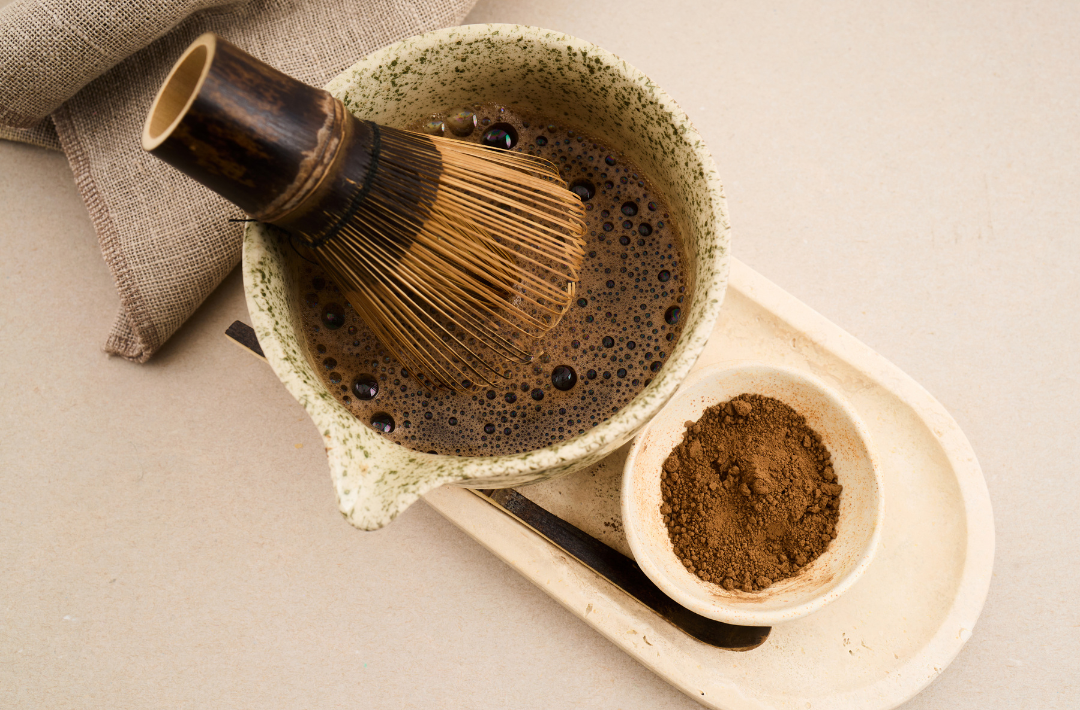
Hojicha is a Japanese green tea, but instead of being steamed like matcha, it’s roasted over charcoal. That roasting gives it a completely different profile. Where matcha is grassy, intense and a little bitter, hojicha is smooth, nutty and almost caramel-like, with a gentle smokiness. It’s far more approachable. That’s exactly why brands are paying attention.
The commercial case is already built
The global hojicha drinks market sits at roughly USD 2.1 billion and is forecast to reach USD 3.9 billion by 2034. It’s showing up everywhere: lattes, ready-to-drink beverages, ice cream, chocolate, even savoury sauces and marinades. The roasting also drives the caffeine content down relative to matcha and coffee, which taps straight into demand for gentler alternatives. Hold that thought, because it’s the second place I see hojicha products come unstuck.
There’s a practical driver too. Matcha has been hit by serious global shortages, so brands are actively hunting for the next big thing that won’t run dry.
If you’re in beverages, bakery or confectionery, hojicha is a flavour worth watching right now. But the thing that makes it premium is the same thing that creates your regulatory exposure. A lot of hojicha’s appeal comes from where it’s grown. Single-origin leaf from Uji or Shizuoka. The moment you put origin on a label, you’ve made a claim that has to be true and substantiated.
Origin labelling doesn’t sit where most founders think it does
This is where I see products come unstuck. Country of origin labelling is not in the Food Standards Code. It sits under the Country of Origin Food Labelling Information Standard 2016, made under section 134 of the Australian Consumer Law, and it’s enforced by the ACCC rather than FSANZ or your state food regulator.
Different law. Different regulator. Different consequences. Maximum penalties under the ACL reach the greater of $10 million, three times the benefit obtained, or 10 per cent of annual turnover for a corporation. For an individual, it’s $500,000.
Tea is a non-priority food. Your product might not be.
The Standard divides food into priority and non-priority categories. Non-priority foods only need a country of origin text statement identifying where the food was grown, produced or made. No kangaroo logo, no bar chart.
Tea and coffee are one of the seven non-priority categories, and it covers tea and herbal infusions in both dry and ready-to-drink form. Straight hojicha powder or a hojicha tea sits in that lighter category. Confectionery is also non-priority, and it captures chocolate products, ice cream and other frozen confectionery. A hojicha chocolate bar or a hojicha gelato is treated the same way.
Everything else is a priority food, and that’s where founders get caught. A hojicha sauce or marinade is a priority food, because sauces, chutneys and relishes are specifically excluded from the seasonings category. A hojicha cake is a priority food, because cakes are excluded from biscuits and snack foods. Same story for a hojicha muesli bar. If those products are grown, produced, made or packed in Australia, they need the full standard mark: kangaroo logo, bar chart, and a percentage of Australian ingredients calculated on ingoing weight.
Milk-based hojicha lattes sit in genuinely grey territory, because the Standard covers ready-to-drink tea but explicitly excludes milk from the soft drinks category. That one needs a proper look at your specific formulation before you commit to artwork.
One more thing worth knowing. If you decide to use the kangaroo logo or the bar chart voluntarily on a non-priority food, you lose the concession. You then have to comply with the priority food rules in full.
Roasting might make it Australian. Packing it won’t.
A “made in Australia” claim turns on whether the food underwent its last substantial transformation here, not on where it was packed or who owns the brand.
The ACCC’s own guidance is useful on this point. It treats roasting a green coffee bean to make coffee for drinking as a substantial transformation. It treats blending imported dried herbs to make herbal tea as not a substantial transformation. Importing Japanese green tea and roasting it here to make hojicha looks a lot more like the coffee example than the blending one, but I wouldn’t sign off on that without seeing the actual process.
What is clear is the other end of the scale. Importing finished hojicha and packing it into your retail format is not a substantial transformation. That product is packed in Australia. It is not made in Australia, and labelling it that way is a straightforward breach.
Uji and Shizuoka claims sit outside the safe harbour
This is the part that catches premium brands, and it’s the reason I wanted to write this post.
The ACL gives businesses safe harbour defences for country of origin representations. Meet the conditions under the Standard, and you have an automatic defence against an allegation that the claim was misleading. It’s genuine protection, and it’s worth having.
Those defences only cover country of origin. They do not extend to place of origin. “Single origin Uji” and “grown in Shizuoka” are place claims, not country claims. There is no safe harbour sitting underneath them. If the claim is challenged, you carry the full weight of sections 18 and 29 of the ACL with nothing to fall back on.
In practice, that means supplier documentation tracing the leaf back to the named region, held for at least 12 months after the food is sold, and able to be produced when a regulator asks. A supplier’s marketing deck is not substantiation.
You cannot say “low in caffeine”
This one catches almost everyone, and it sits back under the Food Standards Code rather than the ACL.
Caffeine is a biologically active substance, so a claim about how much of it is in your product is a nutrition content claim under Standard 1.2.7. Caffeine is not listed in the nutrition content claims table at section S4-3 of Schedule 4. That matters because section 1.2.7-13 says a nutrition content claim about a property that isn’t in that table may only state that the food contains or does not contain the property, or state a specified amount in a specified amount of food.
It then goes further. That statement must not use a descriptor from Column 3 of the table, or any other descriptor, unless the descriptor indicates the food does not contain the property.
So “low in caffeine” is not available to you. Neither is “naturally low caffeine”, “reduced caffeine” or “less caffeine than coffee”. What you can do is declare the actual number, for example “contains 25 mg caffeine per 250 mL serve”. Caffeine free is permitted, because it indicates absence, but only if it’s true.
If you’re thinking about going the other way and calling it decaf, Standard 2.10.4 sets hard compositional limits. Decaffeinated tea must contain no more than 4 g/kg of anhydrous caffeine on a dry basis. For decaffeinated instant or soluble tea it’s 3 g/kg. Those are compositional requirements, not marketing preferences.
One related point while we’re in Standard 2.10.4. Tea is defined there as the product made from the leaves and leaf buds of Camellia sinensis. Hojicha qualifies. But if you sell a product on the basis that it is tea, it must be tea, so blends that carry rice, botanicals or dairy solids need their naming checked before artwork.
Your pack makes an origin claim before anyone reads the fine print
Mount Fuji on the front. Cherry blossom. Japanese script across the label. Green and gold. These carry as much weight as written words, sometimes more.
The test is the overall impression the packaging creates for a reasonable consumer. If your artwork reads as authentically Japanese and the tea was actually sourced from another growing region, a compliant “made in” statement on the back panel will not rescue you. The ACCC has been explicit that businesses cannot rely on small print and disclaimers to excuse an overall misleading message.
Hojicha is a real opportunity and the timing is good. Two things will decide whether your pack survives contact with a regulator. Whether the origin story you’re selling is one you can prove on paper, and whether the caffeine claim you want to make is one the Code actually allows.
Neither issue starts at launch. They start at formulation and artwork. For a clearer picture of where food brands go wrong, download our FREE guide on the six biggest labelling and health claim mistakes we see in practice: https://learn.nprconsulting.com.au/labelling-health-claims


Jasmine Solomou
BNutrSc Graduate, Deakin UniversityNPR Consulting