Mushroom supplements: are you selling a food, or a therapeutic good?
If you’re selling a mushroom supplement in Australia, this is the post you didn’t know you needed to read.
The line between a food and a therapeutic good isn’t always obvious.
The consequences of getting it wrong are. Products referred to the TGA. Stock pulled from shelves. Public recalls. And in most cases, brands that had no idea they were on the wrong side of the line until a regulator told them.
The most uncomfortable part? The regulatory position has been published the whole time. The FSANZ Novel Foods record is explicit about mushroom extracts. The TGA has issued specific guidance on it. The information isn’t hidden, contested, or ambiguous. Most brands simply haven’t gone looking for it.
Two regulators, two lanes, one expensive misunderstanding
Australia regulates food and therapeutic goods under two separate frameworks. Food Standards Australia New Zealand (FSANZ) sets the standards for food through the Food Standards Code. The Therapeutic Goods Administration (TGA) regulates therapeutic goods under the Therapeutic Goods Act 1989.
Most mushroom supplement brands assume they sit in the food lane. They have a product, a label, and they’re selling it as a food or beverage. The assumption is reasonable. It’s also incorrect for a large share of the market.
Generally, when a food standard applies to a product, that product cannot also be regulated as a therapeutic good. But the threshold question, is this a food at all?, is one that brands rarely ask. And when a product is more appropriately regulated as a therapeutic good than as a food, that issue is referred to the trans-Tasman Food-Medicine Interface Group for consideration. The classification is not the brand’s to assert. It’s determined by the product’s ingredients, its presentation, and in some cases, its method of manufacture.
What the FSANZ record actually says
This is where the “grey area” defence falls apart.
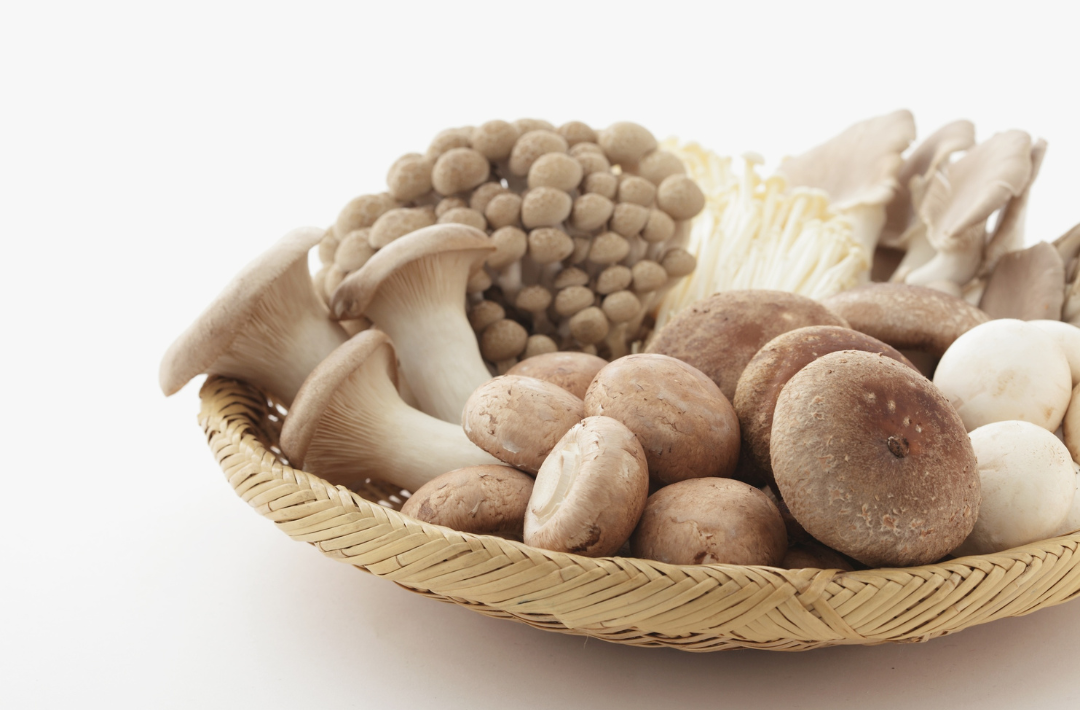
The species of mushroom matters. Whole or dried mushrooms with a tradition of use as food in Australia or New Zealand are typically regulated as foods. But mushroom products supplied in capsule form, or manufactured by extraction processes such as alcohol extraction, are likely to be therapeutic goods. That is not a marginal interpretation. It is the regulator’s published position.
It also means that if your supplement is a liquid or powdered extract rather than a whole or dried culinary mushroom, the starting assumption flips. You are not presumptively selling a food. You may be presumptively selling a therapeutic good, regardless of how you’ve been marketing it.
The novel foods problem brands keep missing
There is a second, independent way to fall offside, and it catches products that have nothing to do with capsules or claims.
A novel food is a non-traditional food that requires a safety assessment before it can be legally sold as food in Australia and New Zealand. Several of the most popular mushroom species on the market right now, Hericium erinaceus (lion’s mane) among them, do not have an established history of consumption as food in Australia or New Zealand. Until a species is included in the list of permitted novel foods under the Food Standards Code, it is prohibited from retail sale as a food.
The implication is blunt. If one of these species is in your product, and you’re selling that product as a food, the product should not be on the shelf. Not because of a labelling defect or a claims problem, but because the food itself is not approved for sale. This is a status that exists before a single word of marketing copy is written.
Even an approved species won’t save a non-compliant product
Suppose your mushroom species isn’t classified as a novel food. You’re still not in the clear because the second pathway into TGA regulation concerns how the product is presented, not what’s in it.
The TGA’s guidance is consistent on this. A product can be captured as a therapeutic good on the basis of:
– Format. A medicinal presentation, such as a capsule.
– Comparison. Positioning the product against a medicine (“skip the supplements, try our mushroom powder instead”).
– Claims. Any representation that the product has a physiological effect — immunity, energy, focus, cognitive function, anti-inflammatory action, stress reduction.
Therapeutic claims must not be made about a food unless they are specifically permitted under a relevant food standard. So the very language that mushroom brands lean on hardest in their marketing is often the language that reclassifies their product out of the food lane entirely. Any one of these factors can do it. Intent is not a defence.
What the wrong side of the line costs
This is the part that doesn’t show up until it’s too late to fix cheaply.
A product that crosses into therapeutic goods territory without the corresponding approvals can be referred to the TGA, pulled from shelves, and recalled publicly. A recall is not a quiet correction. It is a public record that attaches your brand to a compliance failure, frequently for a mistake the founders genuinely didn’t know they were making.
And this isn’t hypothetical. It has already happened to brands operating in exactly this space. Regulatory scrutiny on mushroom supplements is increasing, not easing, with the TGA having issued dedicated guidance precisely because the category has grown faster than its compliance practices.
The takeaway for founders and brand owners
The mushroom category is a textbook example of a regulatory boundary that looks like a marketing decision and isn’t. The classification of your product is determined by law and by published regulatory positions, not by which shelf you’d prefer to sit on.
If you sell a mushroom supplement in Australia, three questions are worth answering before your next production run:
- Is your species an approved food? Check whether it has a history of food use in Australia and New Zealand, and whether it appears as a permitted novel food under the Food Standards Code.
- Is your format a food format? Extracts, capsules, and concentrated powders pull you toward the therapeutic goods framework.
- Do your claims belong on a food? Any implication of a physiological effect that isn’t a permitted food–health relationship is a flag.
The cost of answering these questions now is a few hours and an honest review. The cost of answering them after a recall is your stock, your shelf space, and your reputation.
If you want a clearer picture of where food brands commonly go wrong, download our free guide on the six biggest labelling and health claim mistakes we see in practice, and how to avoid them before they become expensive problems. Get the free guide: https://learn.nprconsulting.com.au/labelling-health-claims


Jasmine Solomou
BNutrSc Graduate, Deakin UniversityNPR Consulting