The global colour shift: what the US crackdown on synthetic dyes means for Australian food brands
A significant change is underway in the global food industry, and it’s centred on something most consumers never think twice about: the colour of their food.
In the United States, regulators are moving to phase out petroleum-based synthetic food dyes. It’s one of the most consequential reformulation pressures the industry has faced in decades, and while it’s happening on the other side of the world, the knock-on effects are already being felt by Australian manufacturers.
What the FDA has actually done
In January 2025, the FDA formally revoked its authorisation for FD&C Red No. 3, a synthetic dye long used in candies, frostings, frozen desserts and some baked goods. Food and beverage manufacturers have until January 15, 2027, to reformulate. Ingested drugs have until January 18, 2028.
That was the starting gun. A few months later, the Department of Health and Human Services announced a broader push to eliminate six further petroleum-based dyes, Red No. 40, Yellow No. 5, Yellow No. 6, Blue No. 1, Blue No. 2, and Green No. 3, from the US food supply by the end of 2026. Unlike Red No. 3, this is not a formal ban. It’s a voluntary arrangement between the FDA and industry. But with state legislatures moving faster than the federal government – California, West Virginia, Texas, Virginia, and others have already passed their own restrictions – food companies are facing a patchwork of mandatory deadlines that effectively force national reformulation anyway.
Why a swap isn’t really a swap
On paper, replacing a synthetic dye with a natural one sounds like an ingredient substitution. In practice, it’s a reformulation project.
Natural colours behave very differently from their synthetic counterparts. They’re more sensitive to heat, light, pH and oxygen. They fade faster, shift hue during processing, and often have shorter shelf lives. A beetroot-derived red that looks beautiful at the point of manufacture can brown out over six months on the shelf. A turmeric-based yellow may separate or dull under certain lighting conditions. Formulators aren’t just changing an ingredient line; they’re rebuilding the product’s stability profile.
There’s also the supply side. Natural colours come from agricultural inputs – beetroot, paprika, spirulina, carmine, annatto, and anthocyanins from fruits and vegetables. That means their availability and price are tied to growing seasons, weather events, and harvest yields in specific parts of the world. A poor season for a single crop can ripple through hundreds of finished products.
The Gatorade reformulation is a case study in what this actually looks like
In April 2026, PepsiCo announced that Gatorade is removing artificial FD&C colours from its Thirst Quencher and Gatorade Zero lines, replacing them with plant-based dyes drawn from fruits, vegetables, algae extracts, turmeric and butterfly pea flower. Powder stick mixes will transition first, with the core beverage range reformulated by the end of 2026
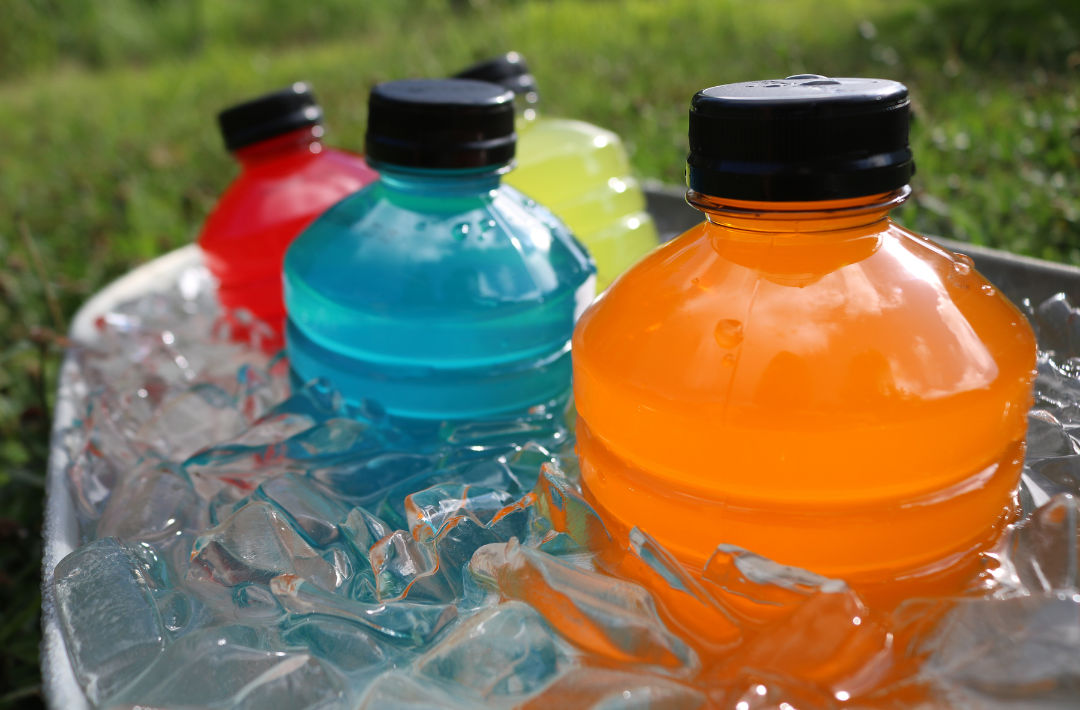
It’s worth sitting with what this means. Gatorade’s brand identity is built on colour. The electric blue, the neon orange, the bright yellow, these aren’t decorations, they’re how consumers identify flavours on the shelf. PepsiCo’s own US beverages president described the change as “incredibly difficult” and acknowledged the very real risk that shoppers won’t recognise the drinks without their iconic hues. Internal data reportedly shows that removing artificial ingredients makes nearly half of consumers more likely to buy the product, but that same colour change could make loyal drinkers hesitate at the shelf.
This is the tension every reformulating brand is navigating right now. You can absolutely match the hue with natural alternatives, but you’re doing it at a higher cost, with more complex stability considerations, and often with a narrower margin for error on shelf life. And if a company the size of PepsiCo, with R&D resources most Australian founders can’t imagine, is calling this “incredibly difficult,” it’s worth taking seriously as a signal of what the transition actually involves.
Why this matters in Australia
Australia hasn’t announced equivalent bans. Synthetic colours remain permitted under the Food Standards Code, subject to the usual permissions and use levels. So on the face of it, Australian manufacturers could carry on as normal.
But our food industry doesn’t operate in isolation. We share ingredient supply chains with the US, Europe and Asia, and when a market the size of the United States suddenly pivots to natural colour alternatives, global demand surges. That demand pressure pushes prices up, tightens availability, and creates lead-time issues that Australian manufacturers, particularly small and mid-sized ones without long-term supply contracts, feel directly.
The reformulation isn’t happening here. The cost of it is.
For any brand currently using synthetic colours or considering a move to natural colours for marketing reasons, this is the moment to carefully consider sourcing, cost modelling, and shelf-life testing. And for brands exporting to the US, the compliance question is no longer hypothetical; it’s on a deadline.
The bigger lesson
This is a useful reminder that ingredient choices, regulation and supply chains are deeply interconnected. A regulatory decision made in Washington changes what’s commercially viable in Brisbane. A state-level ban in California shapes what a contract manufacturer in Victoria can actually source next quarter. And when the world’s biggest brands start reformulating, the ingredient market reprices itself around them.
For food founders, the takeaway isn’t that synthetic dyes are about to disappear from Australian shelves. It’s that the assumptions you made about your ingredient supply when you launched, price, availability, and stability are subject to forces well outside your control. Building reformulation flexibility into your product development process isn’t paranoia. It’s good business.
Most reformulation problems don’t start at the factory. They start earlier, in the label copy, the claims language, the ingredient declarations that get drafted before anyone’s thought through the compliance consequences. If you want to know where brands most commonly go wrong, the free guide covers the six biggest labelling and health claim mistakes and how to avoid them becoming expensive problems. Get the free guide here!


Jasmine Solomou
BNutrSc Graduate, Deakin UniversityNPR Consulting