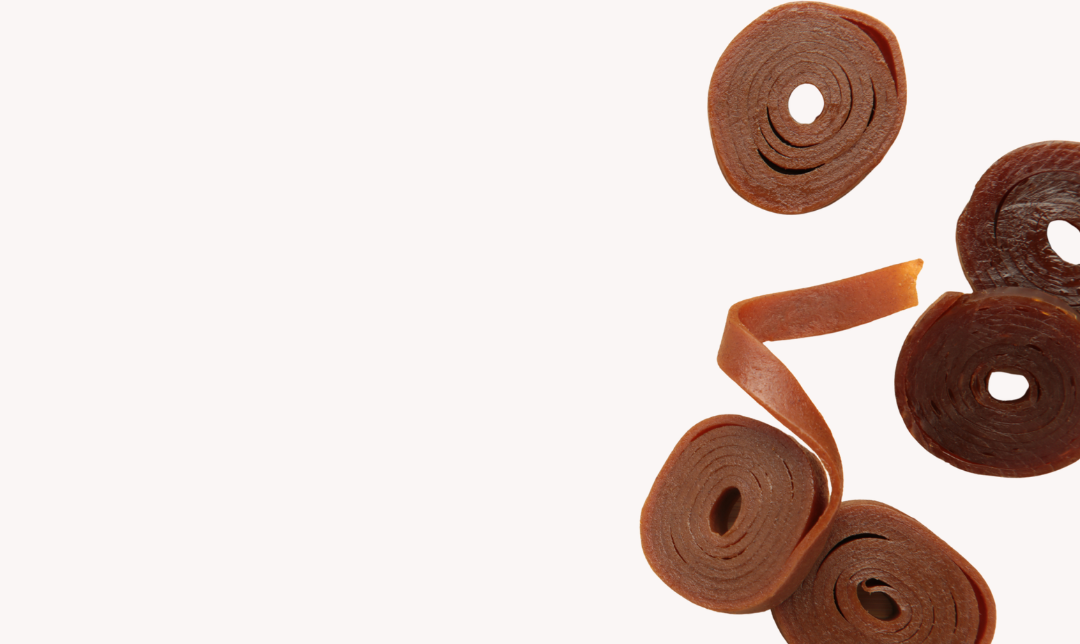
The squashed apple that cost Uncle Tobys its favourite claim
“Made with real fruit.” It’s one of the most reassuring phrases a parent can read on a lunchbox snack, and it still runs across shelves of fruit straps, bars and pouches today. It also sits behind one of the most instructive marketing cases in Australian food regulation.
Back in 2006, the ACCC took a hard look at how Uncle Tobys was selling its Roll-Ups. What’s telling is that the regulator’s concern had almost nothing to do with whether the individual words were true.
What the ACCC actually objected to
Roll-Ups were marketed as “Made with 65% real fruit.” The ingredients panel went further, stating that a Roll-Up was equivalent to a set percentage of fresh fruit. And a television ad, the “Fruit Shrink” spot, showed an apple being flattened down into a strip, as if the product were simply fruit pressed thin.
Put together, the message was hard to miss: this is mostly fruit, gently squashed, barely processed. Uncle Toby’s gave the ACCC court-enforceable undertakings to stop all of it, the 65% claim, the fresh-fruit equivalence on the panel, the apple-flattening ad, and any suggestion the product was made by turning a piece of fruit into a strip with little processing and nothing else added.
No single statement was a clean lie. That was never the point.
It was never about one false word
This is the part founders consistently underestimate. Misleading conduct law doesn’t grade your packaging sentence by sentence. It asks what a reasonable shopper walks away believing.
A defensible-sounding “65%,” paired with imagery of fruit being compressed and language about minimal processing, added up to an impression the actual recipe couldn’t support, a recipe led by maltodextrin and sugar, with concentrated fruit puree and modified starch doing much of the work. The headline was arguably accurate. The overall impression was not. Uncle Toby’s own stated takeaway was exactly that: brands have to weigh the impression created by labels, branding and advertising as a whole, not one claim at a time.
Why this still catches brands out
The case predates the Australian Consumer Law, but the principle it turned on is now written straight into it. Section 18 prohibits misleading or deceptive conduct. Section 29 prohibits false or misleading representations about a product’s composition. Both are assessed on the dominant impression, not the literal defensibility of each word
And “real fruit” cues are everywhere right now, especially in the kids’ snack aisle, where the gap between a fruit-forward front of pack and a starch-and-sugar-forward ingredient list is often wide. If your packaging, imagery and claims combine to overstate how much fruit is really in there, or how little has been done to it, the individual words won’t save you.
The percentage trap
There’s a second layer worth knowing. Under Standard 1.2.10 of the Food Standards Code, an ingredient you emphasise on the label, in words, pictures or graphics, becomes a characterising ingredient, and its proportion has to be declared as a percentage. Note what counts as emphasis: not just the words “real fruit,” but an image of an apple compressing into a strip. Plenty of founders assume that once the number is on the panel, the job is done.
It isn’t. Uncle Tobys did declare a figure, and the figure was part of the problem, because framing processed, concentrated fruit as equivalent to fresh fruit is what shaped the misleading impression. The Code tells you when a percentage is required. It doesn’t make a misleading one safe.
What founders should take from it
If you’re building a product around “real fruit,” “natural,” “wholefood” or “minimally processed,” assume your claim will be read as a package: the headline, the imagery, the implied processing story and the ingredient panel, all measured against what an ordinary shopper concludes. If the dominant message runs ahead of the formulation, you’re exposed, no matter how carefully each phrase was worded.
And, as with most compliance problems, this one doesn’t begin at launch. It begins at formulation and in the packaging brief, long before anyone opens the Food Standards Code. The Uncle Tobys undertaking dates back to 2006. The mistake it documents is being made on shelves this week.
Still unsure whether your label or health claims actually stack up under the Food Standards Code? Most brands don’t realise they’ve made a compliance mistake until the packaging is printed or a retailer flags it. We’ve put together a free guide breaking down the six biggest mistakes food brands make with labelling and health claims, and how to avoid them before they become expensive problems. Download the free guide here: https://learn.nprconsulting.com.au/labelling-health-claims


Jasmine Solomou
BNutrSc Graduate, Deakin UniversityNPR Consulting